All About Aluminum Castings: Comprehending Their Duty and Relevance in Manufacturing
Aluminum castings are essential to contemporary manufacturing, providing a blend of lightweight residential or commercial properties and durability. They facilitate intricate layouts while reducing assembly prices. Industries such as aerospace and automobile regularly make use of these elements for boosted performance. The manufacturing of aluminum spreadings is not without its obstacles. Comprehending the nuances of this process reveals both the advantages and prospective challenges. Checking out these aspects will supply deeper insights right into their expanding importance.
Introduction of Light Weight Aluminum Spreading Processes
Aluminum casting procedures play a necessary role in production, providing versatility and performance. These procedures involve pouring liquified aluminum into mold and mildews to develop precise shapes and elements. Various methods are used, including sand spreading, die spreading, and investment casting, each distinguished by its method of mold and mildew development and the intended application.
Sand casting uses a blend of sand and binder to develop mold and mildews, permitting intricate geometries. Pass away spreading, on the other hand, involves requiring liquified aluminum into steel mold and mildews, leading to high accuracy and smooth finishes. Financial investment casting, usually made use of for intricate designs, includes producing a wax pattern covered with a ceramic shell, which is then filled up with liquified aluminum.
These casting methods deal with varied industrial requirements, making light weight aluminum a preferred material for parts in sectors such as automobile, aerospace, and durable goods. The choice of casting method substantially influences the final product's high quality and efficiency.
Advantages of Making Use Of Aluminum Castings
The advantages of using aluminum castings in manufacturing are countless and considerable. To start with, light weight aluminum's lightweight nature adds to minimized total item weight, enhancing power effectiveness in applications such as vehicle and aerospace sectors. Furthermore, aluminum spreadings exhibit excellent rust resistance, guaranteeing long life and longevity in rough settings. The product's thermal and electrical conductivity likewise makes it suitable for numerous applications, including electronics and heat exchangers.
Furthermore, light weight aluminum castings can be produced with detailed layouts, permitting much more complicated shapes that satisfy certain practical requirements. This flexibility adds to lowered setting up costs and enhanced style adaptability. The spreading procedure itself is reliable, allowing for high-volume manufacturing with constant top quality. Aluminum is recyclable, making it an ecologically pleasant choice in production. Jointly, these advantages highlight why aluminum castings are increasingly favored across varied industries, providing both performance benefits and economic efficiency.
Common Applications of Light Weight Aluminum Castings
While various products are utilized in manufacturing, light weight aluminum spreadings stand apart due to their broad variety of applications throughout several industries. These spreadings are widely made use of in the vehicle industry for engine parts, transmission housings, and architectural parts, contributing to lighter vehicles and enhanced fuel efficiency. In the aerospace market, aluminum spreadings are essential for airplane elements, where weight decrease is important for performance and security.
In addition, the electric industry employs light weight aluminum castings for housings and structural aspects in machinery, taking advantage of the product's excellent conductivity. In durable goods, aluminum spreadings can be located in products such as appliances and showing off equipment, providing longevity and a contemporary aesthetic. Moreover, the construction industry utilizes aluminum castings in architectural aspects, window frameworks, and fixtures, showcasing their versatility and stamina. On the whole, light weight aluminum castings play an important function in improving product efficiency and efficiency throughout numerous markets.
Trick Manufacturing Techniques for Aluminum Castings
The manufacturing of light weight aluminum castings counts on different strategies, with sand spreading and pass away spreading being among the most popular. Sand spreading entails producing mold and mildews from sand, permitting complex designs and big components. In comparison, die casting makes use of high-pressure injection of molten light weight aluminum into recyclable molds, supplying precision and effectiveness for automation.
Sand Spreading Process
Sand casting stands as one of the most extensively utilized methods for generating aluminum castings, many thanks to its flexibility and cost-effectiveness. This procedure entails producing a mold and mildew from a mixture of sand and a bonding agent, normally clay. Once the mold is prepared, liquified aluminum is poured into it, allowing the steel to fill the cavity. After cooling down, the mold and mildew is escaped to reveal the spreading. Sand spreading accommodates complex geometries and huge components, making it suitable for various applications. In addition, it permits very easy modifications, allowing makers to readjust designs quickly. Nonetheless, the surface area finish might require extra machining for exact applications, making sure the end product fulfills top quality criteria.
Pass Away Casting Techniques
Die casting represents a very efficient approach for creating light weight aluminum castings, characterized by its ability to supply high precision and superb surface finish. This strategy largely entails compeling liquified light weight aluminum into a mold and mildew under high pressure, ensuring that intricate forms and fine information are caught properly. There are 2 main die spreading techniques: hot chamber and cold chamber. Hot chamber pass away casting appropriates for alloys with reduced melting points and permits for faster cycles, while chilly chamber die casting is perfect for high-temperature alloys, needing separate melting systems. Both approaches improve production rates and decrease material waste, making die casting a recommended choice in sectors such as auto and electronic devices, where toughness and dimensional accuracy are paramount.
Sustainability in Light Weight Aluminum Casting Manufacturing
While the demand for light weight aluminum spreadings remains to grow, makers are increasingly focusing on sustainability in their manufacturing procedures. This change is driven by the demand to decrease ecological impact and preserve natural deposits. Numerous firms are embracing recycling campaigns, using scrap light weight aluminum, which especially decreases power usage and greenhouse gas exhausts contrasted to key light weight aluminum manufacturing. Additionally, innovations in casting technologies are making it possible for more reliable use of materials, lessening waste throughout the manufacturing process.
Manufacturers are additionally discovering environment-friendly choices to traditional casting approaches, such as 3D printing and advanced mold technologies, which help optimize resource usage. Aluminum Castings. In enhancement, applying lasting methods in supply chain management assurances that resources are sourced sensibly. Consequently, the aluminum casting market is making strides toward a more sustainable future, aligning with global ecological goals while meeting the increasing need for high-performance light weight aluminum items
Difficulties and Considerations in Light Weight Aluminum Casting
Aluminum casting presents different difficulties that makers need to this link navigate to ensure item honesty. Design complexity can complicate the casting process, leading to possible issues and increased production time. Additionally, maintaining strenuous quality control criteria is crucial to fulfill the needs of precision and integrity in ended up parts.
Layout Intricacy Issues
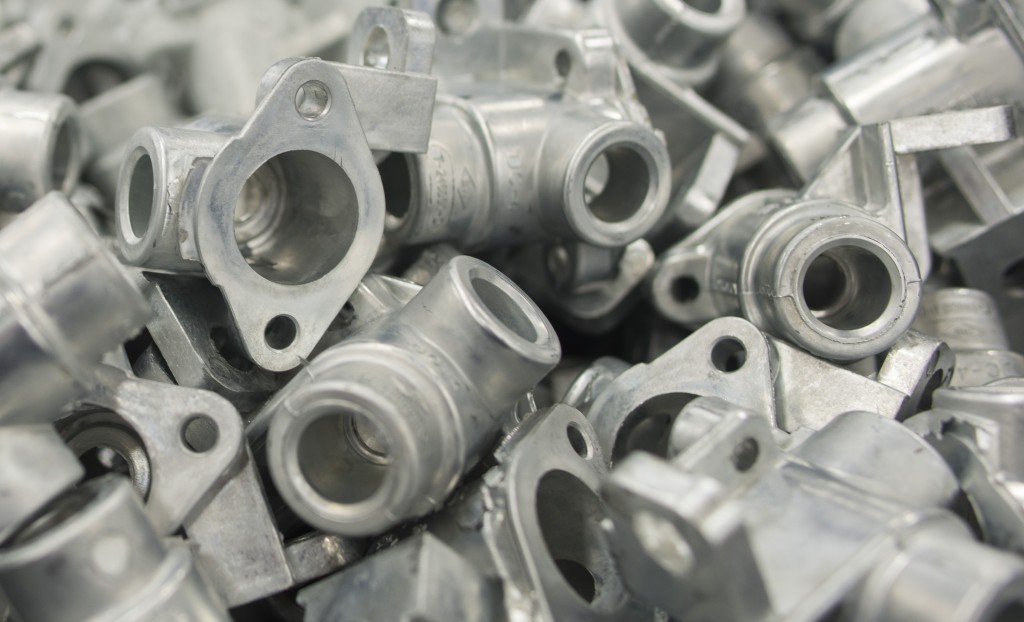
Designing components for aluminum casting offers numerous complexities that designers have to browse to achieve ideal results. One considerable challenge is the need for precise geometry; intricate layouts can bring about difficulties in mold production and boosted danger of flaws. Furthermore, thermal homes of aluminum necessitate mindful factor to consider of cooling rates, as unequal air conditioning can cause bending. Wall density variations likewise position a difficulty, as they can impact flow features and architectural integrity. Designers have to stabilize style visual appeals with manufacturability, ensuring that functions such as fillets and ribs are optimized for toughness without complicating the casting procedure. Considerations concerning draft angles are crucial to assist in mold release, further making complex the style process. These aspects jointly emphasize the ins and outs involved in light weight aluminum casting design.
Quality Assurance Challenges
Achieving top notch light weight aluminum castings includes navigating a series of quality control difficulties that can significantly impact the last product. First, variants in raw product composition can lead to variances in casting properties, making it important to guarantee material top quality. Second, the spreading procedure itself is at risk to defects, such as porosity and shrinkage, which can jeopardize structural integrity. Furthermore, temperature control throughout melting and pouring is essential; fluctuations can result in uneven solidification, affecting dimensional accuracy. Extensive assessment techniques, including non-destructive screening, must be utilized to recognize flaws early. Keeping rigid process documents and adherence to market standards is indispensable for traceability and top quality guarantee, highlighting the elaborate equilibrium called for to generate dependable light weight aluminum spreadings in manufacturing.
Future Patterns in Light Weight Aluminum Casting Modern Technology
As producers seek to boost effectiveness and sustainability, innovations in light weight aluminum spreading innovation are arising to satisfy these demands. One substantial fad is the integration of automation and expert system, which simplify manufacturing procedures and boost accuracy in casting operations. These innovations reduce human mistake and maximize resource usage, inevitably resulting in cost reductions.
Furthermore, the fostering of sophisticated products and alloys is reshaping the landscape. New formulations boost efficiency qualities, such as deterioration resistance and lightweight properties, making aluminum castings a lot more functional across numerous markets.
Additionally, sustainable practices are gaining grip, with a focus on recycling and reducing waste. Techniques such as 3D printing are also being checked out to produce intricate geometries click this site that were previously unattainable
Frequently Asked Concerns
Exactly How Do Aluminum Castings Contrast to Various Other Products?
Aluminum spreadings supply advantages such as light-weight, rust resistance, and exceptional thermal conductivity compared to other materials. They are usually liked for applications calling for sturdiness and performance, specifically in aerospace and vehicle industries.
What Is the Life-span of Aluminum Castings?
The life-span of light weight aluminum spreadings commonly varies from 10 to 50 years, depending upon environmental problems, usage, and maintenance. Their rust resistance and longevity add significantly to their durable check performance in numerous applications.
Can Aluminum Castings Be Recycled?
Yes, aluminum castings can be reused. The recycling process is reliable, permitting for the recuperation of aluminum without significant loss of high quality, making it a lasting choice in production and decreasing environmental influence.
What Safety Procedures Are Needed Throughout Aluminum Spreading?
During light weight aluminum casting, important security measures include wearing appropriate individual protective devices, ensuring correct air flow, preserving tools, using fire-resistant materials, and applying safe dealing with protocols for molten steel to avoid injuries and crashes.
Just How Do Temperature Level Modifications Impact Aluminum Castings?
Temperature changes significantly influence aluminum castings by affecting fluidity, solidification rates, and mechanical homes. Fast air conditioning can cause raised brittleness, while steady air conditioning advertises far better structural integrity and lowers the threat of issues.
Die spreading, on the various other hand, involves forcing liquified light weight aluminum into steel molds, resulting in high precision and smooth coatings. The production of light weight aluminum castings relies on numerous methods, with sand casting and pass away casting being amongst the most popular. Sand spreading stands as one of the most widely utilized approaches for generating aluminum castings, many thanks to its versatility and cost-effectiveness. Die spreading stands for a very effective approach for generating aluminum spreadings, defined by its ability to deliver high precision and exceptional surface finish. While the need for aluminum castings continues to expand, manufacturers are significantly focusing on sustainability in their production processes.